Blog
HomePersonal
Occupying Mars
Why we should expand human consciousness in space.
Vanessa Li · May 2024
In the grand tapestry of the cosmos, humanity's existence is but a fleeting moment. Homo Sapiens has been around for 300,000 years, which is 0.007% of Earth's 4.5 billion-year timeline. Humanity is so fortunate to exist, but is vulnerable to extinction. Like a flickering candle flame, any gust of wind can extinguish the flame. History reminds us that any civilization could go extinct, as many once powerful empires have. Elon Musk founded SpaceX with the ambitious goal of enabling life on Mars, aiming to preserve the fragile and invaluable human consciousness.
Occupying Mars goes beyond expanding our living space. Some may think that we have plenty of problems to worry about on earth, why bother with the extraterrestrial? The answer lies in the limitless possibilities in the outer world. There are known unknowns, and unknown unknown waiting for us ahead. Known unknowns are the things that we know that we don't know. Unknown unknowns are the things that we can't even imagine. There are mysteries that awaits us in the uncharted territories of the universe. And Our goal is nothing less than a complete description of the universe we live in (as Stephen Hawking said in The Brief History of Time). We won't fully understand the benefits of exploring the universe until we venture into the unknown and explore the boundaries of our familiar world. We might be able to find unexpected insights and groundbreaking knowledge. The journey towards that mission is a long and arduous one, but we are making progress. There is nothing engineering cannot achieve, and we are getting closer everyday.
Ad Astra per Aspera.
The global space economy has reached more than $500M in 2023 with private companies emerging as crucial drivers of space missions. Compared to federal agencies, private companies have proven to be more efficient in leading innovative initiatives, perhaps driven by a more fervent commitment to their missions and more effort to control cost. I am highly optimistic that startups are the powerhouse of innovation and that incumbent players must support them. As highlighted in The Three-Body Problem, science is humanity's greatest strength. To halt our progress, aliens (the San-Ti) had to kill our science. It becomes evident that our pursuit of innovation is paramount to our survival as a species.
Driving down the launch expenses is the key to opening doors for sustainable exploration. SpaceX has done a great job in making rockets reusable. Startups are driven by the need to survive in a competitive market, so they are incentivized to minimize cost to keep themselves alive. The cost problem is best solved by private companies because federal agencies like NASA often fund projects based on government priorities rather than market forces, leading to less pressure to economize. Private companies also tend to be a leaner leadership (space.com). The collaboration between NASA and private firms is essential because it leverages NASA's regulatory framework with private sector's efficiency. Private companies are further driven to lower cost from NASA fixed-price contracts. Fixed-price contracts set a price upfront for what NASA is willing to pay for a project. SpaceX's starship, for example, operates under a fixed price deal with NASA. This arrangement motivates SpaceX to minimize project costs, allowing them to retain any savings as investment in other projects. Reducing the costs for space delivery is essential to making interplanetary life possible. There are industries yet to be created, such as fields like space agriculture, space medicine, interplanetary delivery, space tourism, space waste management, terraforming mars, asteroid mining, deep-space communication, and more. They all rely on sustainable transportation in outer space.
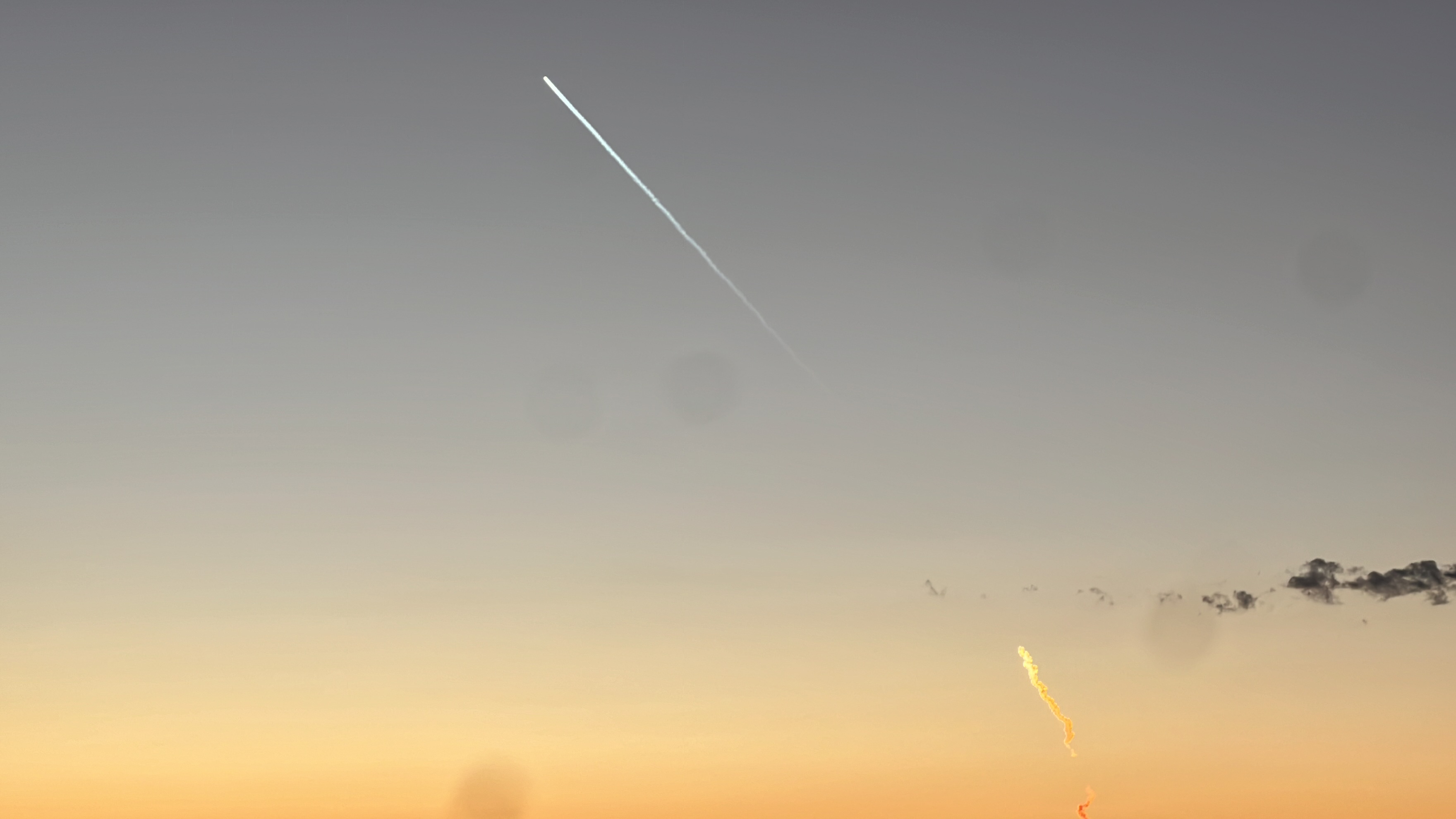
When I watched the Starship launch from SpaceX's mission control in the headquarters, I was swept away by waves of awe as it ascended to orbit. Carrying my little laptop with me and dressed in sweatpants from my sleep, I wanted to watch us taking a step further for humanity. There were around 60 employees gathered around the mission control room. All energetic and excited for the launch, despite being 5am and I knew that no one slept well. The countdown filled me with the same anticipation as the moment just before a roller coaster plunges down its first drop. 5,4,3,2,1… People rallied exuberantly. In that fleeting moment, we were united in wonder, witnessing the extraordinary power of space exploration.
The flames formed bubbles of ashes that looked like dirty cotton candy, and up the rocket went. Plumes of exhaust trailed behind, swirling against the deepening sky. I watched through the cameras as the rocket ascended further away from Earth. I wondered what it would feel like to watch earth from a faraway distance. How would I feel leaving home to go somewhere very, very far away? Maybe that will come one day, hopefully within my lifetime.
I never knew that watching kerosene combust through reaction with liquid oxygen can be so mesmerizing. One of my favorite quotes was that life is not measured by the number of breaths we take, but by the moments that take our breath away, and this was one of the moments that took my breath away.
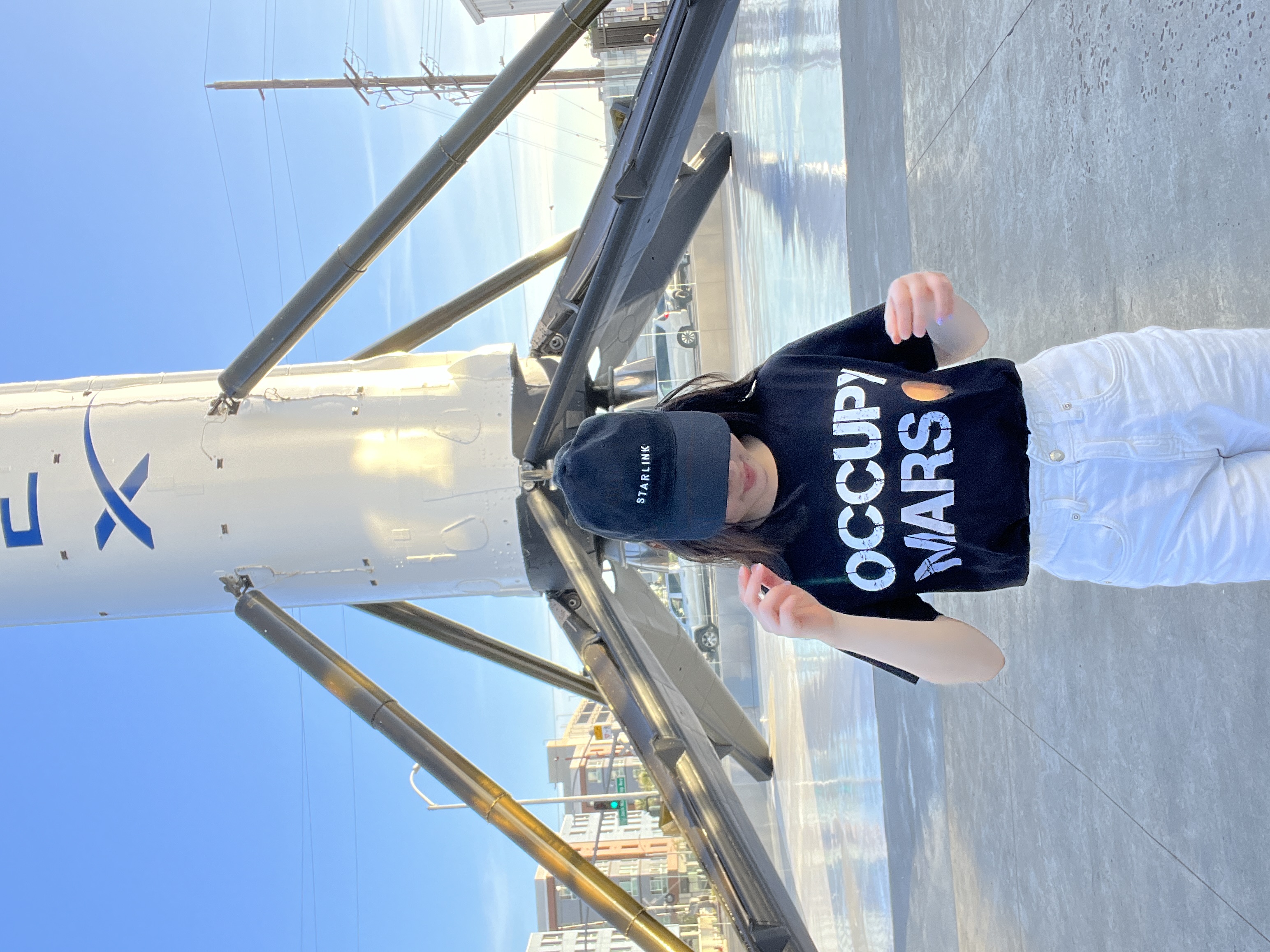
Mankind was born on Earth. It was never meant to die here. — Interstellar